 EN
EN
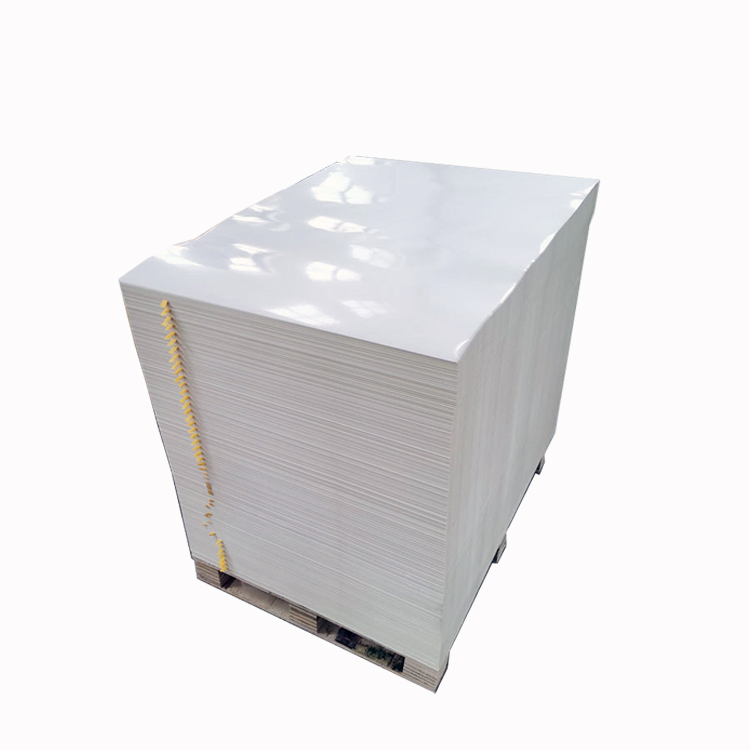
In various industries, sticker paper printing acts as a critical link to assist customers with brand visibility and product identification, including marking logistics information or labeling retail products. The defined and clear printing of designs on sticker paper sheets ensures a business's brand and information legibility. These methods are applicable to both small scale personal customization as well as large scale industrial production, and have proven to be effective in practical service to hundreds of enterprises across different industries.
Selection of Printers and Resolution
Different printers and settings produce varying quality of prints and different choices of printers create the potential of better or worse prints. For example, authoritative industry standards show that printing stickers requires ink to dry and/or weigh less than 300DPI. A less than 300DPI quality print will cause text to bleed or the text itself will be less readable which causes the edges of the stickers to be less sharp. For example, the cheaper thermal printers and the pigment inkjet printers perform better on the printing of stickers and produce better prints. For example, food processing companies that printed labels on their products at 200DPI failed their food safety inspections due to the ingredient lists being too blurred to read. However, negative outcomes can be avoided by the professional printers and higher DPI settings. When printing stickers, it is always better to choose the higher quality (within reason) printers as the cost of poor quality prints is much higher than the cost of using a poor quality printer.
Matching Sticker Paper Materials
Different materials used in fabrication of sticker paper affect the surface paper, and the clarity of the printing becomes a problem with mismatched paper and printing methods, and surface paper coatings and sticker paper materials combined with functional synthetic paper ie, sticky, tear resistant, and water-resistant paper, and coatings that paper absorb ink out too rapidly - allow the printing of only a few colors, unless, of course, they are all one color and sheathing is that material - elastic materials also allow the printing of only a few colors unless the colors on the spurious surface are coated with a light blocking adhesive that only adheres to the surface during mixing with a drying layer that is coated as outer layer, and hence coated paper is also known as ordinary paper of a sheet of paper).
Kraft paper stickers require surface paper to be printed in such a manner that the adhesive surface that is provided to maintain adhesion is smudged away to allow the paper to separate, thus requiring that adhesion be applied to those sections of the paper that are influenced (although due to the functional properties of the paper, the outer layer is smudged to allow the separation of the adhesive layer). These layers are also known as the adhesive layers. These layers also constitute those that are separated. These also include smudged sections that have adhesive layers separated to allow the paper to separate sections of the paper that are separated from those that are separated and may also be otherwise functional layers and are referred to as functional. These areas are separated by those involved. It is worth noting that Stickers come in a variety of materials, such as coated paper (also referred to as water resistant), adhesive paper, and adhesive paper (often referred to as ordinary adhesive paper), as well as water resistant paper coating.
Standard printers work best with paper between 80-120g in thickness. Any thicker, and printers are likely to jam and produce poorly aligned prints.
Tips for calibrating print settings
Calibration of print settings offers reasonable solutions to compensate for your printer and material. Apply reasonable settings to improve print quality. For initial starting calibration, the working ink settings must be adjusted to the target material of the sticker paper. For instance, a paper type with a high degree of ink absorption may require increased flow of ink to create a more opaque pattern. In contrast, when working with low ink absorption paper, a decrease in the flow of ink becomes necessary to reduce the risk of smearing. In the case of print ink with rapid dry working ink, a higher speed of printing becomes possible. However, for regular print ink with a slow drying time, adjustments must be made to ensure the print ink is fully dry prior to placement of the within the printer. Claiming to be a small batch customization studio, one shop did not take time to set up print adjustments and suffered blurred edges to print because they made the mistake of printing the draft without adjusting the print ratio.
Post Printing Quality Maintenance
Printing stickers is only the starting point. Scientific post-printing maintenance ensures that stickers last long and keep the design clean. The most important factor is to let the ink dry completely. Regular ink dries in 10-20 minutes, while quick-dry ink dries in 3-5 minutes. Touching the stickers before the ink is dry will scratch the design. For stickers that will be used outdoors, film coating is needed to protect the stickers from water, dust, and scratches. The film also improves the 3D effect of the design and sharpens the edges of the image. Stickers that will be displayed for long periods of time should be stored in a dry, cool place to avoid fading ink and warped paper. For example, a brand gift company noted that stickers with a film coating used to last 1 month, but with the coating, they lasted 1 year with the design still clear.
Furthermore, when cutting the stickers, one must employ a professional cutting instrument to ensure the cleanliness of the cut edge and to prevent any damage to the design due to haphazard cutting.
The Value of Clear Sticker Printing
Clear sticker printing is not just a matter of technical necessity, but it is also an important way to realize economic value and strengthen competitive advantages. For retail businesses, aesthetically pleasing and clear product stickers capture consumers’ attention and increase desire to purchase. One bakery, for example, updated product stickers to display clear and bright graphics and saw an increase of 25% in product sales in just three months. Customers also noted the packaging as more professional and trustworthy. Clear stickers with the right information also benefit the logistics and manufacturing industries by improving efficiency in warehousing and transportation and lowering the rate of errors in information recognition. One manufacturing company, for instance, improved their logistics information error rate from 3% to 0.1% by using high definition printed stickers, saving considerable amounts of time and labor costs. Furthermore, high-quality stickers printing helps businesses deliver what is expected in terms of high standards and clear information in legally regulated industries, like food and medicine.
KJNMA has been focusing on the printing materials and equipment supply chain for years and has the manufacturing capability and the supply chain service system to offer companies one-stop services from the selection of sticker paper materials and printer integration to print configuration, and offer different industries high-quality and high-clarity sticker printing services to assist companies in the transition from technical printing to commercially valuable printing.
Finally, printing sticker paper sheets with vivid images is a systematic project that requires the integration of printer selection, material selection, configuration adjustment, and maintenance after printing. The maintenance standard of 300DPI and the correct ink and printing method that match the materials are the most important. Enterprises should realize the potential market for quality sticker printing and incorporate it into their brand development. KJNMA, with its strong manufacturing and supply chain capabilities, offers comprehensive technical support and products to meet the sticker printing needs of enterprises, enabling them to print high-quality stickers that enhance brand value.