
 EN
EN
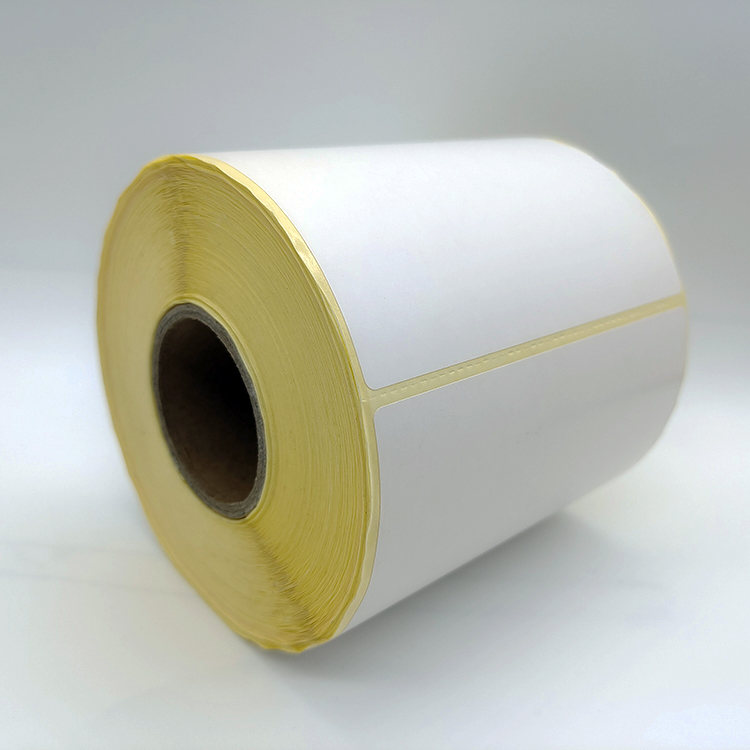
Material Selection
Freezer stickers use a special type of material that provides enough resistance to different states of materials that no embrittlement or cracking occurs throughout hypo, hyper, and more temperate ranges of temperatures. Typical base materials that exhibit more toughness and lower temperature resistance include synthetic papers made of substrates such as polypropylene and polyethylene. These materials can withstand temperatures as low as -40C and do not lose integrity due to tearing and positional changes from frozen food packaging. Another material, PET, provides a higher tensile strength which is required for stickers that will be stored at colder storage temperatures to resist lower temperatures and be moved or rubbed against. An example of this is for a” frozen food manufacturer, the ordinary paper stickers fell off and cracked after one week of storage at -18C, while the synthetic paper stickers had not fallen off and the printing was still legible. This example highlights the importance of base material selection.
Designing Formulas for Cold Temperature Adhesives
A key issue in manufacturing freezer stickers is ensuring that the adhesive layer stays intact and adhered under low-temperature conditions, which requires the design to adhere to strict principles on low-temperature resistance. Most high-quality freezer stickers feature adhesives made from polyurethane. Polyurethane contains polymer chains that are flexible and will not crystallize, nor lose viscosity, at lower temperatures. This design incorporates the solution to the common problem that standard adhesives will become brittle and lose adhesion at cold temperatures. Standards such as ISO 7389 outline the technical requirements for low-temperature flexible adhesives needed in cold chain logistics that, at -40°C, adhere to over 70% of the original bonding strengths after 100 cycles of stretching and compressing. Additionally, cold chain logistics poses challenges such as increased moisture on cartons during transport. Therefore, advanced adhesive formulations are employed that use special coupling agents to bond to the moisture and plastic film, as well as the cartons, ensuring adhesion remains intact.
Testing Performance with Freeze-Thaw Cycles
For freezer stickers, reliable low-temperature resistance does require rigorous performance testing as well as intelligent material and formula design. Professional testing involves a cold temperature chamber at -40°C for 72 hours and then immediate 180-degree bending tests for cracking and delamination. Testing stickers are crucial to the process and involve switching between -18°C and 25°C for 50 cycles simulating the transportation of frozen products from the cold storage to the retail shelves. According to industry testing, qualified freezer stickers should have no raised edges as well as no lost adhesion and the printed ink must remain intact. Results prove the stickers withstand high and low temperature variations throughout the entire cold chain, from production and storage to transport and sales.
Practical Adaptability in Cold Chain Scenarios
Real low-temperature resistant freezer stickers not only withstand extreme cold but are also remarkably flexible to the many different real-world cold chain scenarios. With cold storage, condensation and frost formation are both commonplace. To overcome these challenges, the surface of the waterproof and moisture proof layer will effectively protect the embedded materials inside the stickers from moisture damage. In contrast, ordinary paper stickers will become soft from the condensation and frost, and as such, will fall off. In addition, the viscosity of the frozen meat and seafood products will produce oil seepage. To overcome this, freezer stickers have designed surfaces that are oil-resistant, thus ensuring that the printing is protected and remains clear and legible. A Cold chain logistics sticker will usually be affixed to an uneven surface of a soft packaging. For instance, the frozen bag of vegetables, and it is for this reason that the special flexible PE film freezer stickers can adapt to uneven surfaces. They will also stretch deform as the packaging moves without cracking. A logistics company’s practical application of such freezable stickers has shown that they have been very successful in the design of the stickers as freezer stickers have resulted in over 80% in cold chain transportation. In addition this has greatly improved the efficiency of the cold chain logistics.
Commercial Significance of Freezer Stickers
The ability of freezer stickers to withstand low temperatures makes them commercially valuable to cold chain industry operators. Reliable stickers provide unambiguous identification of an item throughout the cold chain, helping brands portray the desired brand image and avoid losses caused by legible labels during the sale and circulation of the item. Freezer stickers also help reduce the frequency of sticker replacement which is a labor-intensive and costly exercise for manufacturers and logistics providers. In addition, compliant freezer stickers that have passed the International Organization for Standardization (ISO) 7389 test make cold chain products easier to clear at Customs, thereby widening the scope of trade. Quality freezer stickers have become an operational cost-optimizing solution for small and medium-scaled frozen food industry businesses given that the cost of quality stickers is much lower than the operational cost associated with label failures during cold chain transportation.