
 EN
EN
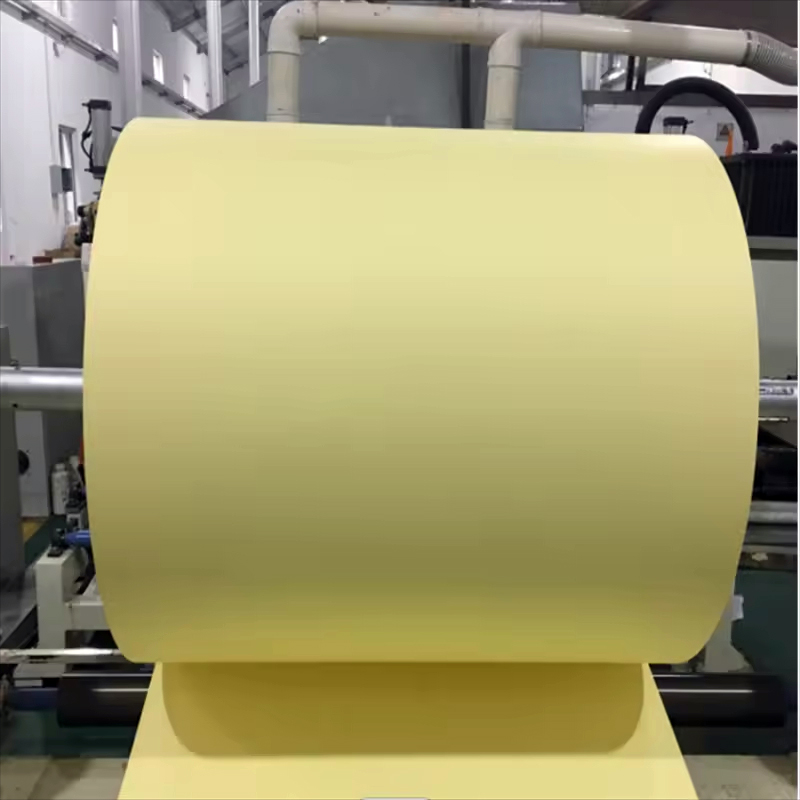
Main Role of Release Paper
The main function of release paper is protection in adhesive products, specifically, protection from the adhesive layer bonding to the surfaces on which the adhesive product is stored, transported, or processed. The National Standard, GB/T33377—2016, for non-silicone release materials, states that quality release paper should show consistent performance when stored and tested at the standard conditions of 23℃±1℃ and 50%±5% relative humidity. The paper must be silicone coated to create a smooth surface that serves as low surface energy barrier that separates the adhesive. This prevents the adhesive from becoming dirty, set, or losing its stickiness. Storage conditions with quality release paper allows an adhesive product to retain its function for 12 to 24 months. In contrast, an adhesive product may become non-functional in 3 to 6 months if it is stored without the proper protective release paper. This is the main reason why protective release paper is a must for adhesive products.
Performance of Process Compatibility
Release paper is easily integrated into all phases of adhesive products manufacturing, eliminating major technical challenges in coating, die cutting, and automated assembly. In die-cutting of electronic adhesive products, the release paper uniformity impacts the end product quality. An electronic component maker in the Pearl River Delta region improved the die cutting quality of its tape products from 82% to 98% after changing the release paper to one with peel force tolerance of ±2g/25mm. For automated production lines, release papers with consistent and uniform peel force ensure efficient and uninterrupted peeling, eliminating the need to stop the production line to clear broken paper and adhesive gets stuck in the line. Furthermore, release papers with varying base materials (glassine and kraft paper) to cover different processing speeds and requirements, including manual low-speed production to high-speed automated production up to 300 meters per minute. This approach allows adhesive product manufacturers to manage their processes more effectively.
Key Performance Index Control
With regard to the release paper quality, core performance indicators include peel force, temperature resistance, and peel force tolerance. Peel force is the measurement of the force necessary to separate the release paper from the adhesive layer, and must be matched to the type of adhesive product; personal care products require a light peel force of 3-10g/25mm, while industrial tape requires a medium to heavy peel force of 35-80g/25mm. Temperature resistance is also a significant index; industrial grade release paper can sustain 130℃ and above and is thus compliant with the industry standards that dictate the need for high-temperature baking during automotive parts production, while medical grade release paper must meet the high temperature stability and thus can meet the requirements for the USP Class VI certification. Quality release paper should have a testing tolerance for peel force to be held between ±3g/25mm, and for the paper uniformity deviation to be held to less than 2% to effectively prevent adhesive residues and paper breaks during use. Without the strict discipline of the indicators, release paper will lose it's versatility when used with adhesive products.
Adaptability of Application Scenarios
Release paper has strong adaptability that can be customized according to varying application scenarios of adhesive products. In the medical sector, medical-grade release paper used for adhesive tapes and band-aids has to comply with no toxicity, no irritation, no residue, and has to pass international medical certifications. In the personal care sector, release paper for sanitary products has to have a light peel force of 5-15g/25mm for a better user experience during peeling. In the electronics and automotive industries, there is a need for high-precision release paper to be used for die cutting of precision parts and bonding of automotive parts, with specifications for high-temperature resistance, no dust, and exact peel force. One of the first release paper manufacturers has a complete spectrum of products with single/double silicone coating that meets over 20 application scenarios like self-adhesive labels, foam tape, and precision die cutting, which demonstrates the great importance of release paper to address the diverse needs of adhesive products.
Business Value Empowerment
Finance costs and efficiency improvements of adhesive products manufacturers and enhancements of competitiveness of adhesive products are the benefits of high-value release paper. One of the electronic component manufacturers in the Pearl River Delta region saved 280,000 yuan in annual labor costs after paper release optimization because the rework rate dropped from 18% to 2%. For mass production factories, release paper with a 99.8% success rate helps to minimize the production cycle and unnecessary consumption of materials. Also, due to the stringent regulations to protect the environment, compliant with the REACH and RoHS standards environmentally friendly release paper is a must for adhesive products to have access to International markets. Some manufacturers have even designed recyclable release paper, which also helps to meet the eco-friendly manufacturing requirements of the customers from the adhesive industry and enhances the market competitiveness of adhesive products and the commercial value of the industrial chain.
Industry Development Trends
Release papers have been developing parallel to other industries such as high-end manufacturing solidifying and evolving environmental protection standards and adhesive product innovations. The newest fields and with rapid growth like smart wear, flexible circuits, and new energy vehicles have a growing need for high-precision release papers. This is high because they need very specific controls for peel forces and resistance to temperature and chemistry. The newest and fast evolving fields have a growing demand for high-precision release papers. The protective environmental coating of silicone paper, and the recyclable raw materials the developed industries have been focusing on, have also become a protective coating. The research and strategic plan Adhesive Industry Development Report indicates that environmentally friendly and high-precision release papers won't exceed a negative growth rate of 15% in 5 days for the next 5 years. The high paper adhesion coupled with the consistent change of technology with this paper is expected to change the overall performance of the adhesive paper manufacturing industry with its expected high growth.