
 EN
EN
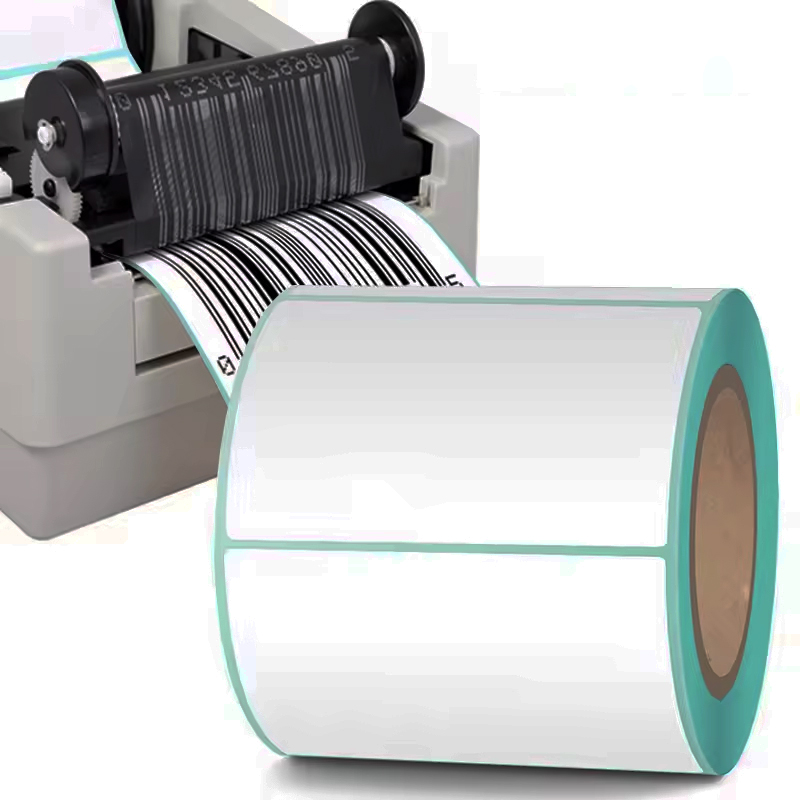
Merger of Ink and Substrate is Made Possible by the Mechanism of Thermal Transfer Printing
Thermal Transfer labels have long-lasting prints because of a unique process involving heat and pressure which is different from direct thermal printing. While direct thermal printing uses a chemical process on the surface of the paper which causes the paper to change color, thermal transfer printing uses a heating element to heat a specific area of a thermal transfer ribbon. This process causes the ribbon's ink to melt and adhere to the surface of the substrate and become a permanent part of the substrate. This fusion of the ink and substrate surface provides a greater bond, allowing the ink to become a part of the substrate rather than just resting on the top of the substrate providing a greater chance for the printed surface to withstand the effects of external pressure and the environment. Testing has shown that under normal storage conditions, the fusion bond on the substrate will retain the printed image for more than two years. This is a much greater life than the typical direct thermal label which will lose the printed image within 6 months. This principle of fusion with the substrate surface is what provides thermal transfer labels with their long lasting attributes and is a widely used and well-known technique within the international industrial printing market.
High-Quality Thermal Transfer Printing Materials
When it comes to the durability of thermal transfer prints, the raw material such as substrates, prints, and ribbons is of utmost importance. Materials like PET polyester film, which is temperature and wear resistant, is used for thermal transfer labels, and is ideal for all application conditions. Polymer resins and weather resistant color pigments provide compliance with international standards like ISO 2836, which is about the chemical resistance and adhesion. Ribbons come in two types; resin-based and wax-resin-based. Based on the National Standard GB/T30899 2022, resin-based ribbons provide high ink transfer and clear prints. Some premium labels have a UV cured coating which protects prints from moisture, oil, and ultraviolet light. Thermal labels with prints of high durability begin with careful selection of raw materials in all the stages.
Industry Applications Prove Long Term Print Quality
In various industries, thermal transfer labels have demonstrated robust and long-lasting print quality. In real-world applications, thermal transfer food labels have shown that they don’t fade when labels are boiled for 30 minutes. This meets the most stringent food grade packaging print requirements, and remains legible for the shelf life and ingredient info throughout the distribution. In power engineering, thermal transfer labels are compliant with DL/T1982 2019 and provide legible print and barcode identification for the operation and maintenance of equipment, even under extreme outdoor weather conditions. In transport and logistics, the tracking barcodes of thermal transfer labels remain clear throughout long-distance transport, extreme weather fluctuations and even during cold chain logistics. These are real life examples of thermal transfer labels and the working conditions they are exposed to, and they all speak to the long-term print quality of thermal transfer labels.
Comprehensive Environmental Testing Guarantees Print Stability
What makes thermal transfer labels endure the elements? It’s the technology and the materials, reinforced by a series of definitive environmental adaptability tests. Our labels undergo rigorous third-party professional testing, including UV aging, extreme temperature shifts, chemical exposure, and abrasion to evaluate print durability. Per GB/T16422.2, thermal transfer labels lose neither print nor color integrity after 1000 hours of UV aging, and are chemically, thermally, and physically unresponsive to cracks and fading in the extreme -20℃ to 80℃ temperature shifts. In Taber abrasion testing, prints are also unresponsive after 1000 cycles of abrasion. Our labels undergo scientific simulations of the extreme environments they face so you can trust the durability of the prints on thermal transfer labels because they are backed by testing and not merely claims.
Durable Printing Adds Value
There are many ways thermal transfer labels's long-lasting printing capabilities benefit businesses. This is a form of printing technology that provides a strong competitive edge over printing technology competitors. Businesses that utilize these labels save directly from printing costs, labor expenses; manufacturing and distributing labels is labor expensive and then again from having to reprint labels due to their to reprint labels due to their to reprint labels due to legibility issues. Additionally, long-lasting printing assists businesses in maintaining a seamless supply chain, thus boosting operational efficiency. Last but not least, long-lasting printing allows businesses to keep printing in compliance with government regulatory standards. In compliance with government regulatory standards, thermal transfer labels ensure that identifying information will not be lost due to unqualified labels; unqualified labels yield compliance risks due to the regulatory standards pertaining to identifying information. For these reasons alone, the global marketplace and cross-border trade the cross-border trade and the global marketplace, thermal transfer labels are a great choice when sending goods to other countries with different climates.
Conclusion
Due to high-quality raw materials construction, advanced environmentally tested printing technology, meticulous industry assessments, and advanced printing technology, thermal transfer labels provide long-lasting printing capabilities. They address the short lifespan of traditional labels and offer the consistent and dependable identification solution various industries need worldwide. With the advancement of material science and testing capabilities, thermal transfer labels will provide even greater durability. They will contribute to commercial trade, industrial production, and everyday life while helping to sustain the continued advancement of the global economy.