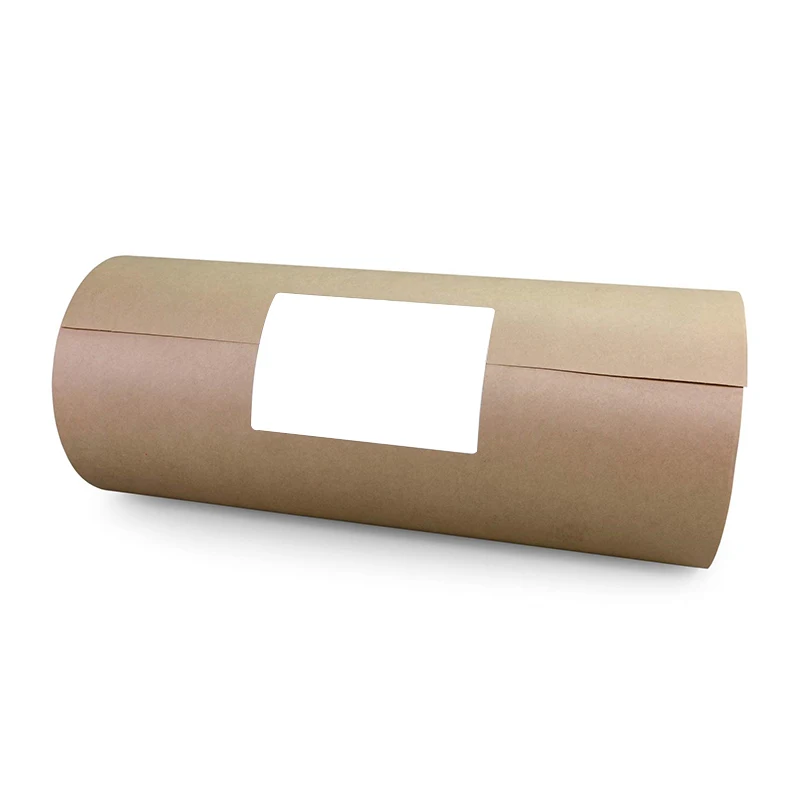
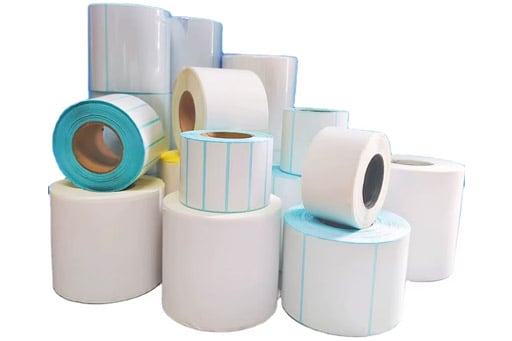
When it comes to choosing PE coated paper rolls for food packaging, the first thing you need to focus on is sticking to authoritative national standards—and the company has always made compliance the top priority when selecting products and supplying goods. The most important standard to keep in mind is GB/T 36392-2018, which is China’s national standard for PE coated paper and board used in food packaging. It officially came into effect in January 2019, and it categorizes PE coated paper rolls into three types based on quantitative indicators, so each type fits different food packaging scenarios. On top of that, you must make sure the product meets GB 4806.8-2022, the national food safety standard for food contact paper and board materials. This standard sets strict limits on things like heavy metals, fluorescent substances, and microbial content. The company has a full set of compliance verification systems, and every PE coated paper roll we select for our cooperative customers must have clear compliance marks on the product label. This isn’t just a basic guarantee for food safety during the packaging process—it’s also the core principle the company follows when choosing raw materials.
Technical Parameter Matching
Technical parameters are what really determine if a PE coated paper roll works for your specific food packaging needs. The company’s technical team has put together a set of targeted parameter matching plans based on years of experience in the industry. For oily foods like fried chicken and pastries, grease resistance is the most important parameter. Any PE coated paper roll used for these foods has to pass the grease resistance test outlined in GB/T 36392-2018—that’s a basic requirement the company has for all oily food packaging paper rolls. If you’re packaging liquid foods like milk or beverage paper cups, leakage performance and heat sealing strength are key. The company always emphasizes that the film layer and the paper base need strong adhesion to prevent liquid from seeping out during transportation and storage. Moisture wetting tension affects how well the packaging can be printed, too. The company will match the wetting tension value with the printing ink based on the customer’s brand printing needs, making sure the patterns and text are clear and don’t fade. Plus, the company will recommend either single or double side coating depending on the customer’s actual packaging needs: single side coating is enough for dry foods, while double side coating is necessary for foods that have both oil and water to ensure full protection.
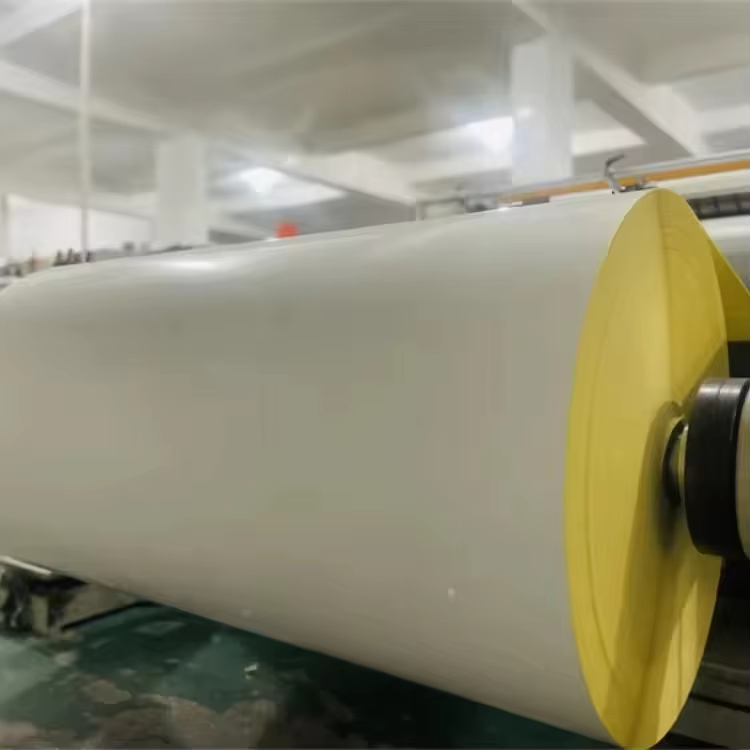
Scenario Based Selection Experience
The company has worked with hundreds of food enterprises across different categories, and real-world application cases show clearly that picking PE coated paper rolls without careful consideration can lead to higher costs and potential food safety risks. One fried snack brand once came to the company with a packaging problem: they had chosen low quantitative PE coated paper rolls (below 40.0g/㎡) for their fried food packaging, which caused oil to seep through the packaging during transportation and led to a lot of customer complaints. The company’s technical team quickly came up with a customized solution, recommending 50.0g/㎡ medium quantitative double side coated paper rolls that meet grease resistance standards. After switching to these rolls, the oil seepage issue was completely fixed. For customers who package frozen foods, the company focuses on testing the low temperature resistance of the PE coated paper rolls. We make sure the film layer doesn’t become brittle and crack at low temperatures (between -18°C and -40°C), and we also check the adhesion of the film layer after repeated freezing and thawing cycles. For fresh foods like fruits and vegetables, the company selects PE coated paper rolls with the right level of air permeability based on the product’s shelf life, keeping the food fresh while preventing moisture loss.
Quality Inspection Verification
Effective quality inspection is key to making sure the actual performance of the PE coated paper roll matches the marked parameters. Over years of procurement and acceptance work, the company has put together a set of simple, easy-to-use on-site inspection methods for customers to reference. First, check the appearance: a qualified PE coated paper roll should have a clean, flat surface with no bubbles, oil stains, pinholes, or missing coating. The company’s quality inspectors will reject any product with an uneven film layer right away, because that can cause local performance to drop. Second, do a simple leakage test: put a small amount of water or edible oil on the paper surface and let it sit for 30 minutes. If no liquid seeps through, the leakage performance meets basic requirements—that’s a quick inspection method the company often uses for on-site sampling. Third, check the product qualification certificate and third-party test report. The report must include test results for core indicators like quantitative deviation and transverse thickness difference, as specified in GB/T 36392-2018. The company also reminds customers to confirm that the production enterprise has a valid food contact product production license, so you don’t end up buying unqualified products from unregulated manufacturers.
Commercial Value Evaluation
Picking the right PE coated paper roll isn’t just about meeting safety and functional requirements—it’s also about helping food enterprises maximize their commercial value. Through scientific product selection solutions, the company has helped many customers optimize packaging costs and enhance brand value. When it comes to cost control, the company always advises choosing the right specifications based on the packaging scenario, rather than blindly going for high quantitative indicators. This way, you can reduce raw material costs without compromising performance. For example, for customers who make small packaged pastries, the company recommends low quantitative PE coated paper rolls. Compared to medium quantitative rolls, these can cut raw material costs by about 20% without affecting the packaging effect. For brand building, the company selects high-quality PE coated paper rolls with good printing performance and stable quality for customers. This ensures consistent product packaging, improves consumers’ visual experience, and helps customers build a good brand image. In addition, the qualified PE coated paper rolls selected by the company can effectively reduce product loss during transportation and storage—like lowering the packaging damage rate for fragile foods and the spoilage rate for fresh foods—thus indirectly reducing the operating costs of the customer’s enterprise.
Environmental Compliance Consideration
With the continuous promotion of national plastic pollution control policies, environmental protection has become an important factor when choosing PE coated paper rolls for food packaging. The company has long been involved in the research, development, and selection of environmentally friendly PE coated paper rolls to keep up with industry trends. When it comes to raw materials, the company prioritizes PE coated paper rolls made from virgin pulp, avoiding products made from recycled raw materials. These virgin pulp rolls not only meet the requirements of GB/T 36392-2018 but are also more environmentally friendly. In terms of product performance, the company has partnered with professional manufacturers to launch biodegradable PE coated paper rolls. These rolls use biodegradable PE film materials, which can break down naturally after use, greatly reducing environmental pollution. Additionally, the company only cooperates with manufacturers that have environmental production certifications. These manufacturers use low-pollution coating processes that align with national green development policies. Working with the company to select environmentally friendly PE coated paper rolls can also help food enterprises enhance their social responsibility image and gain more recognition from consumers who care about environmental protection.
 Hot News
 EN
EN