
 EN
EN
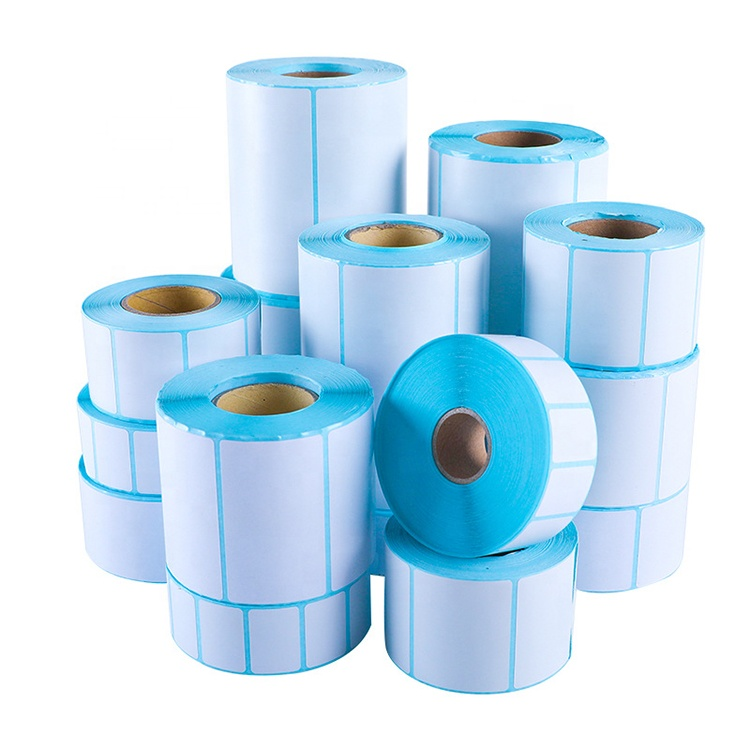
In the last few years, thermal labels have become essential for all parts of the logistics process from warehouse sorting to last-mile delivery. As the logistics industry around the world becomes more intelligent, thermal labels provide technical characteristics that match the practical needs of the industry. For logistics companies of all sizes, thermal labels become a preferred choice. Their popularity is due to the advantages of thermal labels in technology, efficiency, cost, and system compatibility. These are the reasons thermal labels are highly valued in the global logistics industry.
Key Innovations in Thermal Label Logistics
The competitive advantage of thermal labels in the logistics industry is primarily associated with the ability to print on the label and the performance of materials used on the labels. Printing on the label is accomplished through a chemical reaction resulting in no ribbon or ink which is completely different from thermal transfer printing that uses additional materials to print. This feature makes thermal labels ideal for the logistics industry that needs to print in high volumes. Also improved materials for thermal labels including three-proof thermal paper and bottomless thermal paper have solved the problems of paper that easily smudges and is destroyed during the shipping process. Bottomless thermal labels using low temperature thermal curing technology have also solved the problems of paper that turns black when it is used in high temperature environments. This means that the labels will work in complex environments including humid warehouses and and outdoors. Logistics companies tested the three-proof thermal label and found that the text and images remained clear for more than 30 days during the shipping process which was much better than ordinary paper labels.
High Printing Efficiency for Daily Operations
As order accuracy and customer satisfaction becomes more and more important, so does the efficiency of automated order processing systems and their associated thermal printers. Traditional printing systems are outdated and can only print about 30 labels a minute. These outdated printers create a bottleneck where the order processing systems can’t keep up, resulting in slower order processing. To address this, many logistics companies, including an unnamed regional player in the logistics sector, have reported an improvement of over 60% in expedited package throughput. When implementing automated thermal printers at the customer fulfillment centers, the company increased its distribution efficiency. This proved so successful for the printer manufacturer that it gained something many competitors desire – a high-efficiency, mobile printer that can be placed anywhere in the system including high traffic sorter wheels in fulfillment centers and distribution centers that can print barcodes and pack labels.
Cost Reduction through Materials and Energy Savings
Cost regulation is an effective measure for an undertaking of a logistics enterprise. Thermal labels create a variety of cost improvements for the industry from consumables, energy, and maintenance. The ink-free and ribbon-free printing feature of thermal labels spares the continuous purchase cost of consumables such as carbon ribbon. This feature can save logistics enterprises about 30% of consumables costs annually. Additionally, the newly developed bottomless thermal label reduces the material cost by 25% in comparison to a traditional label bottomless base paper. This also avoids the waste of base paper materials and further reduces to procurement costs. Regarding energy consumption, thermal printing devices** also have been known to consume lesser power, with energy consumption per 1,000 labels being 1/5 of that of the thermal transfer printing devices. The simple structure of thermal printing devices also reduces the failure rate, meaning that the annual maintenance cost is less than that for traditional printing devices.In 2024, thermal labels will continue to dominate the global label printing system market due to their cost advantages, and are expected to help the market reach 11.08 billion RMB and a compound annual growth rate of 5.5% by 2031.
Integration with Logistics Management Systems
An important reason for the popularity of thermal labels is the ability for seamless integration with any of the systems for managing logistics and the intelligent development of logistics. Printing systems for thermal labels can connect in real time to the WMS and TMS systems and perform data synchronization. This means that order info, package info, and delivery info can be automatically printed onto the thermal labels without the need for any manual input. This process eliminates the human error associated with the manual entry of information. In the logistics processes of the pharmaceutical industry and in cross-border logistics, which involve very high levels of requirement of information accuracy, this is especially important. Several leading logistics firms have achieved process-automated intelligent labeling through the integration of thermal printing devices with their logistics management systems. This has reduced the error rate of package info to less than 0.3%. Also, thermal labels can print a wide range of barcodes, as well as 1D and 2D barcodes. These codes readily facilitate, and are readable by, scanners in the logistics process, and this allows for end-to-end traceability of any given package. Ultimately, this wireless integration improves information management in the entire logistics supply chain.
The Commercial Value of Supply Chains
Thermal labels add value in multiple ways, not only enhancing operational efficiency and cost reduction at individual enterprises but also providing enduring commercial value across entire logistics supply chains. While thermal labels expedite the operational pace of constituent elements in the logistics supply chain, shortening the delivery duration of packages and enhancing the service levels of entire supply chains. Additionally, thermal labels, in association with bisphenol-free thermal paper, provide print solutions that are less harmful to the environment. As a result of the paper-base waste from conventional thermal labels, developing a bottomless thermal label is instrumental in reducing/reversing the ecological harm associated with the manufacturing and use of thermal labels. The year 2023 saw a remarkable milestone in the global thermal printer core market, with domestic enterprises' shipments surpassing 30% and breaking import reliance to establish independent mass production of core components. This advancement heightens the accessibility of thermal label technology to supply chain service providers, especially small and medium-sized logistics enterprises.The logistics industry needs continuous technological improvements in how they operate and environment impact. Thermal labels help supply chains become more digital and have fewer carbon emissions.
Overall, technical benefits, logistics and systems efficiency, cost reduction, and seamless integration can explain the rapid adoption of thermal labels in logistics. Thermal labels technology will continue to innovate, and as the logistics industry becomes more intelligent, the role of thermal labels in the global logistics market will be more significant, and it will bring more and better technology to the logistics industry, and provide more comprehensive value.