
 EN
EN
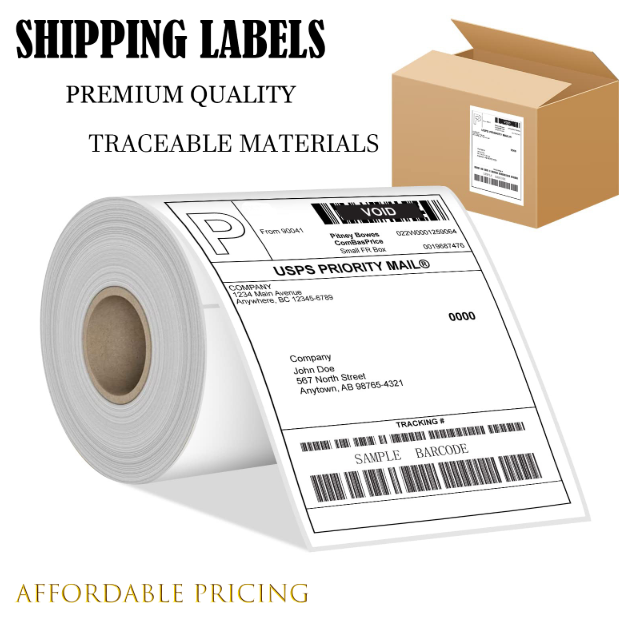
Common Problems with Packaging Labels
When it comes to irregular packages, like soft goods, cylindrical, and rounded, fabric, etc., there are various logistical labeling issues. Over the years, I have seen delivery failures and the costs resulting from improper labeling, and I have seen a large number of failures. Labels can go on curved surfaces but they come off and are easily warped. Soft surfaces, or porous surfaces, also reduce the effectiveness of adhesive. Additionally, large, fragile, or irregularly shaped packages lack stable surfaces to apply the label. This leads to irreparable barcodes, lost packages, and packages being incorrectly routed. About 15% of logistical delays with irregular parcels are due to labeling issues. This increases operational costs and erodes customer satisfaction and brand perception. To resolve these issues, reliable materials and methods are needed.
Labeling Guidelines
Correct attachment begins with correct label placement. Pick one large irregular part but avoid corners or edges to where labels could fray or bend. Consider the label being reinforced if there are zippers, seams, or joints. For cylindrical shaped packages, label the center instead of the ends. Then, flatten the label with a firm backing card to a soft or woven package and read the label. All placement should fully comply with IATA and postal regulations to allow unobstructed visibility of labels and to allow the label to be scanned in all transit and delivery locations. This reduces delivery errors.
Adhesives and Material Choices
The types of materials and adhesives used in design and manufacture labels have a direct impact on how long your labels last. Regular labels made of paper used in an office are simply not good enough. Consider instead labels made of synthetic paper that are more resistant to tears and moisture and have a higher friction resistant coating. Ensure that your packaging is done with proper adhesion to the surface of the packaging to which they are being applied. For rough, dry, or textured materials use an adhesive that has a high initial tack. While for plastic or metal materials, use adhesives that are waterproof and have a high temperature resistance. Recommendations from experts in national postal technical organizations stress that irregular shaped packages should use the grade A industrial shipping labels. These types of labels maintain adhesion for extreme high or low temperatures, and remain effective in a humid environment. KJNM has researched and designed label materials to ensure the optimal performance of their labels for transportation of packages in a variety of different transport conditions.
Application
The process for application should always be the same to ensure that a label is applied correctly. Label and surface preparation should always be done thoroughly to ensure that the label adheres to a clean and dry surface free of any dust, and moisture. When peeling the label be done cautiously and smoothly and try to avoid any creases on the label paper. When applying the label be sure to start on one side and move to the other side in a smooth motion to avoid any bubbles or wrinkles. When applying the label to a curved surface it may be required to give little an extra stretch to the label to ensure a smooth finish. For additional reinforcement of the label it may be necessary to use an adhesive transparent tape that is strong but be cautious not to cover any barcodes or text that should be made visible. To ensure a perfect finish a waterproof pouch containing and fixation with a sturdy film over the entire label may be required. When applying the labels make sure that all of the details are correct and scannable. This process allows for the lowing of error rates and achieving the highest logistical standard. The adhesion of the labels allows for packages protection the supply chain.
Special Handling for Certain Package Types
Irregular packages require specific treatment. For cylindrical products, for example, flexible film labels should be used and secured with a circumferential film. In the case of a soft fabric or woven bag, the label should be encapsulated within a sealed rigid pouch and secured well. For fragile or high-value packages, a secondary duplicate label should be placed in a protected position. For larger or heavier equipment, labels should be placed at a consistent level to the eye so that scanning can be done easily. For packages that contain liquids, labeling should be done with a focus on securing the label away from the liquid and applying orientation marks. These methods help to minimize loss and damage to the packages. Additionally, if these methods are applied, packages will comply with the requirements for international shipping.
Business Value and Trustworthy Support
Applying labels correctly for packages that are irregularly shaped further describes the business value that can be created. Customer orders can be delivered in a timely manner without the package being lost or returned, and this also decreases the costs associated with the aforementioned issues. Scanning the package can be done quickly which in turn reduces the amount of labor that is engaged in this task. Customer satisfaction is increased, and trust in the brand improves. Properly applied labels assist in the easy movement of packages through international borders. Goods are protected through the entire process from the country of origin to the country of destination. At KJNM, we offer complete solutions for packaging and labeling. We bring a great capacity to package and label products, and we also offer an effective solution to the supply chain. KJNM can assist you in choosing the best materials and the most efficient process along with a piece of guidance in standard operating procedures.